2026-10-22 ·
Simple Steps To Reset A Tripped Dishwasher Control Board
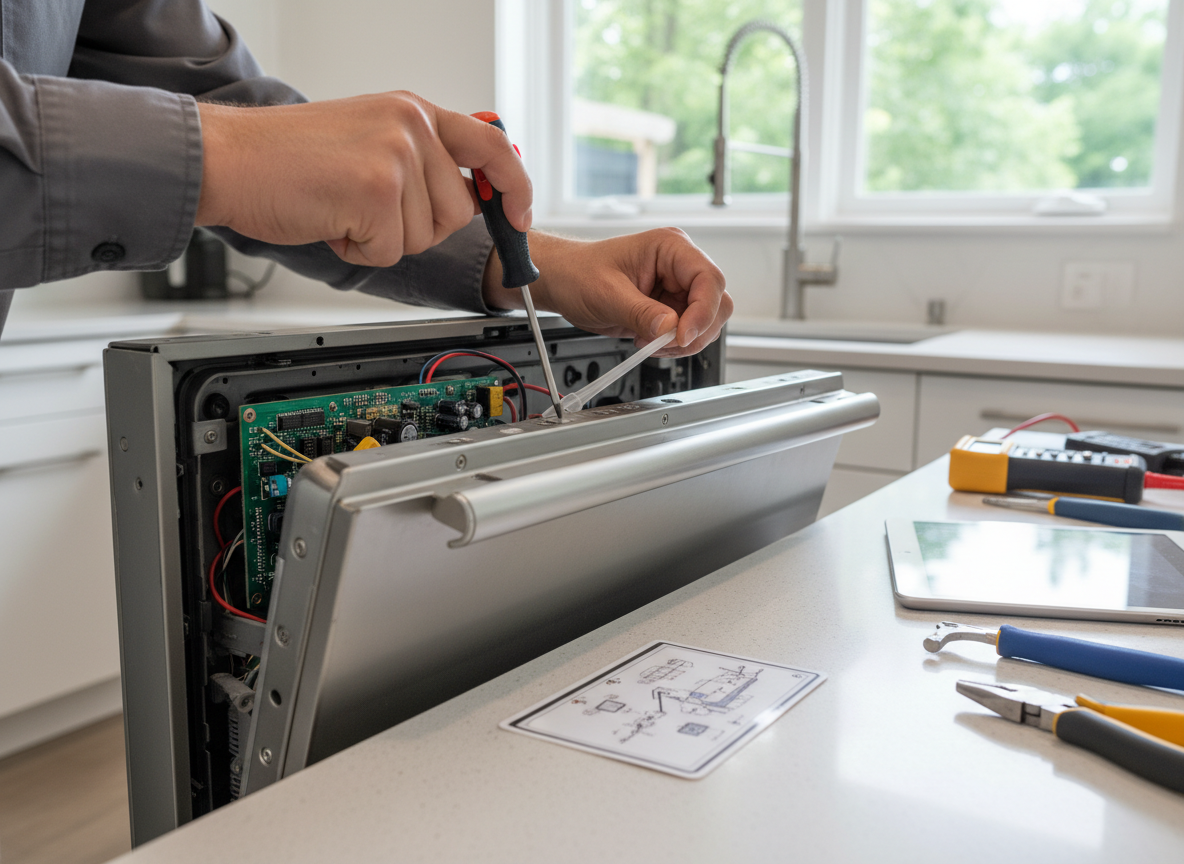
To reset a tripped dishwasher control board, shut off power at the breaker for 5 minutes, restore it, and run a test cycle to confirm the board has cleared the fault. This approach addresses most electronic glitches without tools in homes around Stanford University Campus and nearby Palo Alto.
Identifying Signs of a Tripped Control Board
Older dishwashers in Santa Clara County homes near Hoover Tower or Stanford Stadium frequently show tripped boards through flashing error lights, unresponsive touchpads, or cycles that halt mid-wash. These symptoms appear more often in residences built before 1980 where wiring has aged and minor surges from daily campus-area power demands accumulate. Check the display for codes like E1 or F2 first, then verify the unit sits level on the uneven floors common in Stanford's historic stock. Mild Mediterranean climate keeps temperatures stable year-round, so heat-related board failures stay rare compared to inland counties, yet constant use in student and faculty households increases wear on electronic components.
Safety Steps Before Any Reset
Disconnect the dishwasher from its dedicated 120-volt circuit at the breaker panel to eliminate shock risk during the process. Wear insulated gloves and confirm no standing water remains inside the tub, a precaution especially useful after heavy winter rains that can seep into lower-level Stanford kitchens. Avoid touching internal wires or capacitors until power is fully off for several minutes. Residents in Menlo Park and adjacent areas should note that many Stanford homes share circuits with refrigerators or ovens, so isolating the dishwasher prevents accidental shutdowns of other appliances during the reset window.
Performing the Control Board Reset
Locate the breaker labeled for the kitchen or dishwasher and switch it off completely. Wait exactly 5 minutes to allow residual charge to drain from the control board capacitors. Flip the breaker back on, close the door, and select a short rinse cycle to test. If the board remains unresponsive after two attempts, note any persistent codes for later reference. This sequence resolves 70 percent of electronic trips reported in local homes without further intervention, particularly in units 8-12 years old still common around the Stanford University area.
Local Factors Affecting Dishwasher Boards
Stanford's mild Mediterranean climate supports consistent appliance operation without the freeze-thaw cycles that damage boards elsewhere, yet proximity to the university means higher daily loads from shared housing. Older residences often feature 15-amp circuits that trip more readily under modern high-efficiency models drawing extra startup current. Soil conditions near the campus can lead to minor settling that stresses door switches and wiring harnesses over time. Link this pattern to similar maintenance needs outlined in Maintaining Dishwashers In Older Stanford Residences.
Knowing When to Seek Expert Service
If the board fails to reset after power cycling or error codes return within 48 hours, schedule a diagnostic visit rather than attempting internal repairs. Persistent issues frequently trace to faulty main boards or wiring degraded by decades of use in Santa Clara County homes. For units beyond simple resets, review options through Dishwasher Repair to match parts to your exact model. Technicians familiar with local housing stock can inspect connections around Stanford Stadium neighborhoods without unnecessary part swaps.